
Caribbean Corsairs
By Gary Oswald.
The European colonisation of the Americas was done by numerous countries. England, Scotland, Sweden, Denmark, Russia, Belgium, Netherlands, Prussia, Tuscany, Spain, France, Portugal, Norway, Malta, and Courland in modern day Latvia all made attempts to settle in various parts of the New World, with Spain, Portugal and Great Britain ultimately being the most successful. All these countries however have one major thing in common, they’re Christian.
While some Jews and Muslims existed across these countries, in most of them it was illegal to not be Christian. The exception was the Dutch Republic where open Muslims and Jews could reside in their colonies, resulting in the first synagogue in the New World opening in Recife, Dutch Brazil in 1636 and the first open Muslim settling in Dutch New York in the 1620s; but these were a tiny minority and both colonies would soon be conquered by less tolerant Empires. In Spain in particular there was paranoia about crypto Jews or Muslims starting their own colony in the New World and so colonists were carefully screened to not allow even recent converts, let alone those who hadn’t converted to Christianity, to move to the New World. This eventually reached the point that anyone who was directly descended from someone burnt at the stake for heresy would be blackballed from the colonies.
The main source of non-Christians moving to the New World was the slaves. This is not surprising because the majority of people to move to the New World were slaves, full stop. African slaves comprised about three-quarters of the eight million people to move/be moved to the Americas from 1500 to 1800, though due to high death rates, low birth rates and an inferior social position they left a much smaller legacy than the white Europeans both in terms of number of descendants and in terms of cultural markers. Muslim slaves tended to be unable to pass on their religion in the same way free Christians could. Moreover, Muslim slaves had a reputation of being more likely to rebel (something that often led to the readers of slave rebellions being falsely identified as Muslim in European sources) and as such, North African slaves were banned from being imported in large numbers into Spanish colonies, though how much this was adhered to varied.
The result of all this is less than 1% of the modern New World is Muslim; a religion which is so widespread in Asia, Africa and Europe never really made major inroads into the Americas. This is an obvious AH possibility. The idea of a Muslim colony in America is even the topic of Yaqteenya: the Old World by Yasser Bahjatt, the first AH novel ever written in Arabic, which was both reviewed on this blog and talked about in my interview with Yasser.
The concept of Yaqteenya is of a colony formed in USA by Muslims from Spain. This is almost certainly the easiest population to provide a Muslim colony. In terms of other options, the Ottoman Empire interrogated Spanish sailors about the New World but their naval efforts were primarily focused around the Indian Ocean where they had existing trade and contacts to work with; the New World is a long way from their population centres and any convoys they'd have to send through Gibraltar would be vulnerable. The same is true of Egypt and Somalia, both of which had strong naval cultures but were focused on the Indian Ocean. On the flipside, Muslim countries on the Atlantic lacked that naval culture. Mali did apparently send an armada into the Atlantic but that was never heard back from, and the country was mostly primarily focused on overland trade. Likewise Morocco had some Atlantic ports but they'd lost many of their best to Portugal and as such lacked both the coastal control and the navy that would make such a challenge possible.
Morocco famously did still suggest the possibility of starting a New World colony. This was because plague and famines had hit Morocco in the early 17th century and led to considerable unrest. Ultimately their Sultan, Ahmed Al-Mansur, ended up executing his famously brutal and unpopular son to placate his rebellious subjects. And then he loudly got all the mosques to ring out that the Moroccan Army was ready to conquer Spain and reverse the Spanish ethnic cleansing that had happened a generation before. And he sent a genuine letter to Queen Elizabeth of England saying, ‘hey lets do this, you can have northern Spain and Mexico, we'll take southern Spain and the Caribbean islands’.
And then Elizabeth I, who knew that Spain had a much bigger navy and army than England and Morocco put together, said 'no'. So Al-Mansur went out to his people and said, 'well hey, our cowardly allies have let us down, but you know we were ready to conquer everyone, so we're clearly doing well, just as strong as ever'. Making big promises and then make excuses when it doesn't happen is an old playbook to appear strong. As discussed previously, the letter shouldn't be taken on face value.
But it was a bluff that was made because doing so was in Morocco's economic and military interests. Spain and Portugal funded their attacks on North Africa by their colonies in the New World, taking them weakened the Iberians who threatened Morocco, and Morocco's main export to the UK, which they traded for guns, was sugar produced by African slaves in the Sus valley. The existence of slave sugar plantations in the Caribbean directly threatened that monopoly. If England was to get into that slave owning game, as indeed would happen, that weakens that economic partnership unless Morocco gets into it themselves.
So Morocco had the motive just not the means. In terms of AH, it is tempting to look at the previous Moroccan dynasties, the Almoravids, Almohads and Marinids, all of whom were in a considerably stronger position that Al-Mansur's state as they ruled all the Moroccan ports and held land in Spain, as possible founders of Muslim colonies. Especially since prior to the conquest of Muslim Spain you had a population of rich, sophisticated Muslims who lived in the areas of Western Europe which supplied so much of that early settlement.
The flaw is that they lacked the economic and military motives that both Christian Spain and Islam Morocco had. Muslim Spain had better trade and economic prospects than both and so didn't need the New World to the same extent. You can still write it of course, it adds a fun wrinkle to the Exploration of the New World for there to be inter-religion competition and often uneconomic colonisation is driven for reasons of prestige or to avoid your rivals gaining an advantage.
But something considered less is the idea of those Muslims making up the colony after their conquest by Spain. These Muslims, Moriscos, were originally granted freedom of religion in the terms of surrender but this was not obeyed in reality; forced conversions led to rebellions which led to further forced conversions. By the mid-16th century all religious tolerance was abandoned, Moriscos must either convert or leave.
But as discussed above, even after those conversions there was increasing paranoia within the Spanish court about these secret Muslims and secret Jews, and so in 1609 around 270,000 and 300,000 of the Moriscos were expelled. Some eventually came back, others moved to France or the Ottoman Empire, but a significant minority ended up in Morocco. One of the rejected plans proposed in the Spanish Court, prior to the expulsion, was for these Moriscos to instead be conscripted into the army and sent to Morocco to capture it for Spain but doubts of their loyalty prevented this. Instead, the Moriscos often ended up Spain's most bitter enemies. These exiles founded the towns of Rabat and Salé in modern Morocco and had doubtful loyalty to the Moroccan Sultans, becoming a semi-independent Republic in 1627.
And this republic's economy was based around piracy.

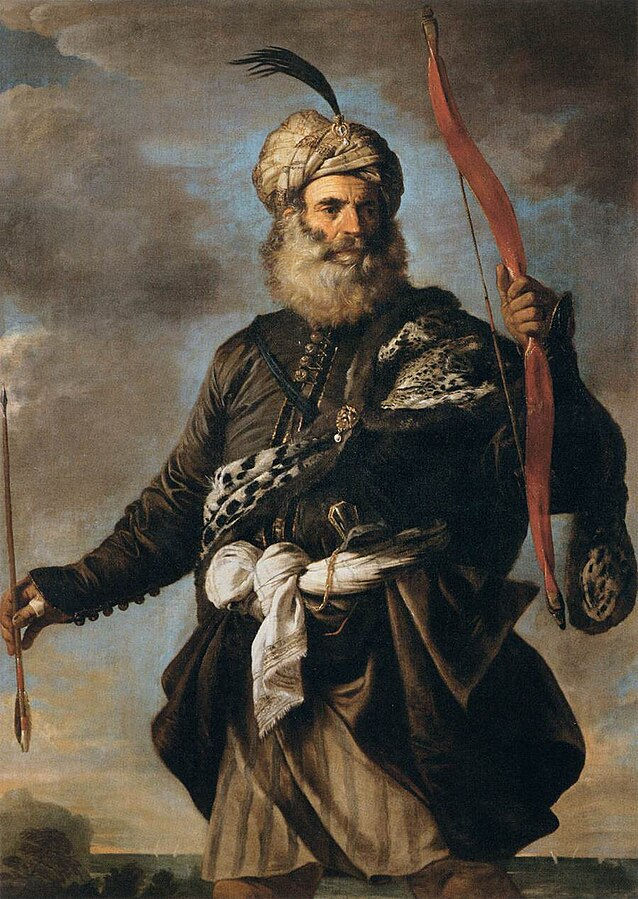
The expelled Moriscos often became Barbary Corsairs and raided landed in Spain for treasure, which they would sell in Amsterdam and London, and slaves, which they sold in Morocco. The Barbary Corsairs had existed since the 11th or 12th century as raiders from North Africa attacked Christian Europe but the 17th Century saw them increase their ambition, attacking outside the Mediterranean for the first time. They hooked up with English and Dutch renegades who refused to stop attacking Spanish ships once their own countries made peace and so converted to Islam to do so. These renegades, sailing out of Muslim ports and with some Muslims in their crew, raided the UK, Ireland, the Canary Islands, Iceland and, most relevantly to this conversation, Newfoundland and the USA.
The ones doing these long voyages were rarely African built ships. Rabat and Salé were objectively bad ports for Atlantic voyages, as the river is so shallow it limits the size of the boats you can build. The corsair ships were tiny compared to European ships for that reason. And it's not defendable from the land really and they weren't rich enough to attack the Portuguese walled ports in Morocco; most of them didn't even have guns but fought with swords. The best ships of the Corsairs were based in Algiers or Tunis, but even those tended to be oar driven galleys without cannons or sails. They were built for raids, not battles. The renegades were so prized and welcomed because they bought square rigged boats to the Corsairs and thus increased their range.
Mehdya, the best post in Morocco for attacking into the Atlantic, did become a pirate haven after the Portuguese retreated from it, but those pirates were overwhelmingly Northern European and not Morisco. But what if the Moriscos had built their town, navy and republic there instead of in Rabat? That gives them the options to house bigger ships and allows the Salé Rovers, as they were called, to look more towards the Atlantic.
A Morisco port in Mahdya is a long way from a Morisco colony in the Caribbean but the logic that leads from the former to the latter is there. The Moriscos and the corsairs have the same motives as Morocco, along with additional ones of wanting to attack the treasure ships, but arguably, despite being only one city, more means. This was both in access to ships, which the Moroccan Sultans didn't have but a Morisco port in Mahyda would, and having people who are willing and able to move in large numbers due to being refugees already. This is especially true if they have support from Morocco, who logically would see the rebellious Moriscos leaving their land to challenge Spain in the Caribbean as a win-win, especially if Rabat had gained some influence in the Royal court the way the corsairs of Tétouan had been able to leverage their own ships into influence in the Royal court a century earlier.
Morisco corsairs in Mahdya would be able to dock larger ships and so, if their friendly renegades could steal some, would have more ability to make cross Atlantic raids like the renegades had done from Moroccan ports. You'd possibly need to prevent the Iberians taking, or at least holding, their own ports in Tangier and the like, which gave the Europeans control over the coastal trade and allowed effective anti-piracy patrols. But even without that, English renegades still raided the USA from Morocco. A more successful corsair fleet with larger ships could do the same and is soon going to see the Caribbean as a richer target than Spain. Moreover, the more powerful and rich that those corsairs get, the more contentious their relationship with the inland Berber leaders will get and so the more encouragement there is for them to move.
The arrival of new European powers in the Caribbean during this time period meant the wars over the New World heated up and broke the Spanish Monopoly, allowing pirates to roam wild and third parties such as native Americans to bounce back to some extent, with the Caribs securing their own independent islands in the 1650s. This chaos could also allow a Muslim colony to be formed there. The Moriscos had no bigger disadvantages than Malta or Courland had after all.
And Rabat is probably the best model for what a Muslim colony founded post 1600 would look like.
Any Muslim colony in the New World is going to be labelled as a pirate one. We know this because Tortuga, a protestant colony in Spanish waters, was labelled as such by the definition of being squatters in Spanish land. This label then become true: because of the hostility between Tortuga and Spain, the Tortugans attacked Spanish ships for supplies, and they also raided technically Spanish controlled Mayan villages in the Yucatan to gain their own slaves as they lacked access to the main Atlantic trade. This model is what a Morisco colony in the New World inevitably looks like.
Piracy in the Caribbean became an escape valve for slaves, prostitutes and indentured servants to run to. Pirate republics such as Tortuga and the Bahamas became refuges away from the control of the main Empires. Any Islamic colony in the Caribbean would likewise end up like this, a port for renegades and pirates to flee to in the same way that Islamic piracy in North Africa became a way for Dutch and English sailors to continue fighting while their countries are at peace.
Pirates also regularly attacked slave ships and plantations and traded with the Maroon communities of escaped slaves. This was not done for humanist purposes, slaves were commodities which pirates normally treated as such and killed in large numbers, but it undoubtedly harmed the slave trade and slowed its growth. We know that because of the reaction of slavers to it and the reasons they supported anti-piracy patrols. This gives Muslim corsairs a supply of Muslim recruits through the Islamic slaves that they would capture.
Though given these slaves would be primarily black and Morocco was beginning to move to a racially based slavery system around this time, this might also not lead to their freedom as the 'Curse of Ham' was being used to justify the enslavement of black Muslims around this time. I do however think that given the bitterness of that fight within Morocco, it is more likely the idea that black Muslims should be free would win out in the Caribbean due to that colony being surrounded by Christians. And this possibly even encourages the Maroons to convert.
I think the most realistic way of getting a Muslim majority colony in the New World, based on changes in the 17th century rather than earlier, is for that to be a Morisco Corsair republic which would use that base to raid for slaves from the Christian colonies and challenge their trade. I do not think this colony would last long, it would doubtless share the fate of the OTL Pirate and Maroon Republics quite quickly once the European Empires fully took control, but I think it's an interesting setting for a smaller scale story than the vast Muslim colonies the likes of Yaqteenya proposes.
Gary Oswald is the editor of the Grapeshot and Guillotines, Emerald Isles, and If We'd Just Got That Penalty anthologies.


Comments