
Tales From Development Hell: Alfred Hitchcock's Titanic
Updated: Jan 24
By Ryan Fleming.
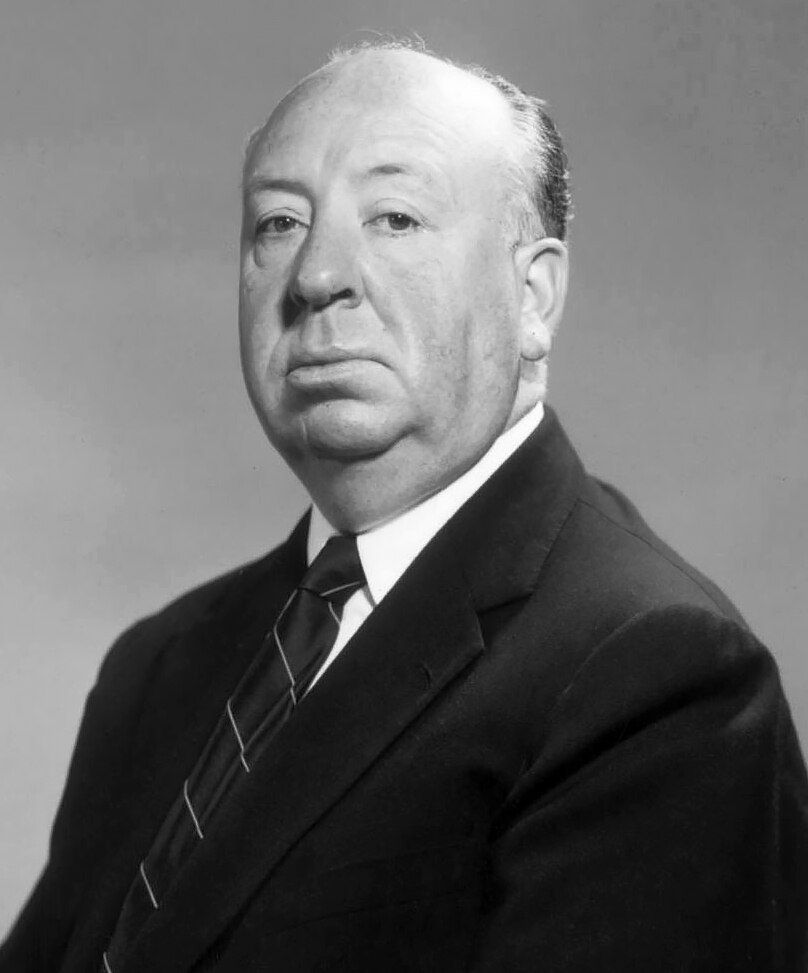
Since its 1912 sinking, the Titanic has loomed large in popular culture, including multiple films. When Alfred Hitchcock, another titanic figure, left the United Kingdom for the United States in the late 1930s, it was common knowledge that his first project would be a drama based on the sinking of the Titanic. For several reasons, that project wound up never happening and Hitchcock’s first American film would instead be Rebecca (1940).
What if a film about the Titanic had become Hitchcock’s first Hollywood effort? How would it impact his later career, as well as later productions based on the ill-fated liner?
By the time he had completed The Lady Vanishes (1938), Hitchcock was aware his career had gone probably as far as it could in his home country. He had turned down Hollywood offers before, but producer David O. Selznick had a tantalising project to offer in a Titanic film. Selznick and Hitchcock had a mutual acquaintance in the former’s brother, Myron, who was also Hitchcock’s agent. Not that the conflict of interest was a problem for Myron, who shopped Hitchcock around other studios to the annoyance of his younger brother. The younger Selznick might have had good reason to be annoyed, after finally breaking free from our studios and launching his own Selznick International Pictures only to face the possibility of his own brother poaching Hitchcock out from under him to Paramount or RKO.
Nevertheless, Selznick was the prime landing point for Hitchcock in Hollywood, though not before he completed his final UK picture, Jamaica Inn (1939), to which he had signed on even before visiting the US for the first time in 1938. The same year the Hitchcock’s finally arrived in Los Angeles permanently saw the Selznick produced Gone with the Wind (1939) released to massive popularity, critical acclaim, and eventually winning ten Academy Awards, whilst Selznick himself would receive the Irving G. Thalberg Memorial Award the same year. As a follow-up to the biggest film of all time at that point, Titanic seemed appropriate subject matter.
Jamaica Inn was adapted from the novel of the same name by Daphne du Maurier. During negotiations for that book, du Maurier gifted Hitchcock an advanced copy of her next novel: Rebecca (1938). Hitchcock in turn brought the novel to the attention of Kay Brown, one of Selznick’s lieutenants who had already brought him the attention of Marget Mitchell’s Gone with the Wind. Brown was integral to the success of Selznick International Pictures in other ways, playing a part in luring not only Hitchcock to Hollywood but also the actors Ingrid Bergman and Laurence Olivier. The enthusiasm of both Brown and Hitchcock for Rebecca was passed on to Selznick. Before long, an adaptation of the du Maurier novel was being spoken of as Hitchcock’s most likely second Hollywood film. After Titanic, naturally.
Further reports from 1939 linked Paulette Goddard as the female lead. American screenwriters Michael Foster and Winston Miller were rumoured to be writing the screenplay; later reports suggested that Hitchcock preferred the English playwright J. B. Priestly, who had worked on Jamaica Inn. Other details show the scale of the proposed production. Perhaps the most famous rumour was that Selznick intended to purchase the unprofitable liner SS Leviathan from United States Lines and scuttle it for footage. Hitchcock might have taken some inspiration from his first visit to Hollywood, where he saw a full-sized trawler in a water tank filmed against three seamlessly connected screens whose back projection showed a panoramic seascape.
There had already been multiple films based on or inspired by the sinking of the Titanic, the earliest of which was released a mere 29 days after the disaster and actually starred one of the survivors, Dorothy Gibson. The Selznick/Hitchcock effort would have needed this scale to stand out from the others and serve as a worthy follow-up to Gone with the Wind. So well-known too are many of the stories from the night of the sinking that the fictionalised version might inevitably draw comparisons with reality. Hitchcock may have had some reservations about how to effectively add suspense to a story where most of the public would already know how it would end. Perhaps this is why when asked Hitchcock’s only recollection of the project was to joke that he wanted to open on a close-up of a rivet, pull back for two hours until the entire ship is in view, then roll the end credits.
It could easily have been Hitchcock’s lack of enthusiasm for the film as compared with Rebecca, but there were other factors at play that sank Titanic as his first Hollywood picture.
At the time Selznick was trying to get production started on Titanic, the disaster itself was only 27 years past. It was still a part of living memory for many people, and corporations. It was reported that the Cunard-White Star Line, formed from the merger of Cunard Line and the very White Star Line that had launched the ill-fated liner back in 1912, had launched a formal complaint with the US State Department about the proposed film, citing the potential negative impact a film about such a recent disaster it would have on the shipping industry. It’s jaw-dropping to be confronted with this as what a British shipping company saw as their biggest concern for loss of business in 1939.
Selznick refused to back down, but there were also competing plans from other producers, some of whom might have even threatened legal action. Selznick and Hitchcock were also beginning to have their own conflicts over development of Rebecca. The director favoured changes to the source material whilst the producer preferred a faithful adaptation. The conflict became acrimonious at times, with Selznick issuing 3,000-word memos criticising Hitchcock’s 45-page outline. If they disagreed so much on the script for a film based on a novel set entirely around an English country house, how could they ever get on together scuttling unprofitable oceanic liners for realism?
Development moved ahead with Rebecca, and between that film being further ahead and the outbreak of the Second World War likely put any Hitchcock Titanic film on ice permanently. Selznick need not have worried, since Rebecca would win him his second Best Picture Academy Award in as many years. The only film of Hitchcock’s to win that award. Their working relationship not harmonious, Selznick began loaning out Hitchcock to other studios, the first result of which was Foreign Correspondent (1940). That film was as overtly supportive of the Allied war effort as it could be under the auspices of the Motion Picture Production Code. He would even eventually make a maritime disaster film after the United States had entered the War with Lifeboat (1944). Selznick, in contrast, closed Selznick International Pictures after Rebecca, loaning out that talent which he had under contract like Hitchcock, Bergman, Vivien Leigh and Joan Fontaine. When he returned to filmmaking after the War he spent most of it trying to top Gone with the Wind, including with Duel in the Sun (1946), starring his then lover and future wife Jennifer Jones.
Titanic needed neither Alfred Hitchcock nor David O. Selznick to remain a prominent part of popular culture. It received a further boost of interest following publication of Walter Lords A Night to Remember (1955) which chronicled the sinking from the testimony of the remaining survivors. It would be adapted in 1958 by Roy Ward Baker under the same name, filming it in a documentary style fashion. Further films would follow, including the television film S.O.S. Titanic (1979) and the execrable Raise the Titanic, whose inflated budget and box office failure prompted producer Lew Grade to quip “it would be cheaper to lower the Atlantic.” Interest would pick up again after the wreck was discovered by Rober Ballard’s US-French expedition in 1985. It would be the setting for the point-and-click adventure alternate history video game Titanic: Adventure Out of Time (1996). The next year it received its most famous popular culture treatment to date with James Cameron’s Titanic (1997), the highest grossing film of all time to that point, which would receive mostly positive reception and win 11 Academy Awards -- in short, it did what David O. Selznick had wanted to do half a century earlier and topped Gone with the Wind.
Could David O. Selznick and Alfred Hitchcock have done in 1939 what James Cameron achieved in 1997? Could they have overcome their opposed working styles and external objections to bring the biggest Titanic yet to the big screen?
It’s a difficult prospect to get their version of Titanic made when they wanted to make it, but that’s also the only time it could have been made given how their working relationship panned out. Even if they still moved ahead with the project as the script disputes over Rebecca wore on, there’s the small matter of the looming general war that Cunard-White Star Line probably should have been more concerned about instead of a British expatriate making a Hollywood film about a maritime disaster.
What if it had been made earlier? What if Hitchcock had never signed on to do Jamaica Inn? This means not only does he likely move to the United States earlier it also means he may never meet Daphne du Maurier and never receive that advance copy of Rebecca. This means that there is no second film waiting in the wings for Hitchcock and Selznick to argue over, and they are free to argue entirely over Titanic. The change in timing might also help Hitchcock keep Selznick at some distance since he may be too preoccupied with interfering on Gone with the Wind to interfere with Titanic. Though Selznick could, and likely would, interfere at any point during production so their working relationship would likely have the same trajectory.
This is perhaps the sad fate of Hitchcock’s Titanic: it simply replaces Rebecca and has little further impact on his career trajectory in the United States. The Second World War was still going to happen, Selznick was still going to leave the industry for a time (perhaps even longer than he did historically, Titanic might be a more stressful production than Rebecca), and consequently Hitchcock would still be loaned out to other studios. Although the projects he works on during the 1940s may be different, he is likely to still earn his bona fides. After all, his career survived making Spellbound with Selznick insisting on his therapist as a technical advisor, even hiring Salvador Dalí as a conceptual artist by way of return salvo. The greater impact may be on later Titanic films with Hitchcock’s being such a prominent production.
Such a prominent film might increase public interest to the point where there are grand-scale histories of the disaster published before Walter Lord’s book, which might then never be written or if it is stands out less in a crowded marketplace. Whereas historically throughout the twentieth century Titanic might have received a film treatment a few times a decade many of these flew under the radar. Hitchcock’s film might, especially if as successful as Rebecca, increase the visibility of such films throughout the years. None of them might approach the quality or success of the Hitchcock effort, but Hitchcock’s effort would lack the realistic, docudrama approach of Baker’s A Night to Remember. It would also lack the visuals and scale of Cameron’s Titanic, simply by virtue of not having the technology at the time.
Though would Cameron even pick such a subject that already had a seemingly definitive Hollywood take on it done by one of the greatest directors of all time during the golden age of Hollywood? Even if he did, would the rights to the simple name Titanic even be an issue? Would negotiations have to be done with the rights holders to the Hitchcock film? Would it even be considered a remake despite being vastly different? If Alfred Hitchcock and David O. Selznick could work together to turn in a Titanic film before the Second World War began, then it might have had a greater impact on later works than it would on either man’s career.
What’s interesting about Hitchcock’s Titanic is the sheer level of assumption from the press and industry that it was definitely going to be his first Hollywood film. There’s a certainty to it in the press throughout 1938 and 1939. Even after his interest in Rebecca became known, that was being reported as his likely second film. There’s less news on the Titanic project being abandoned than one might expect if it were to happen at any later point.
Again, that might have simply been due to the beginning of the Second World War in 1939, which ultimately might have been what sank Hitchcock’s Titanic.
Ryan Fleming is the author of SLP's Reid in Braid and various short stories for the anthologies, as well as editing The Scottish Anthology.


Comments