
The King in the North Comes Early
By Charles E.P. Murphy
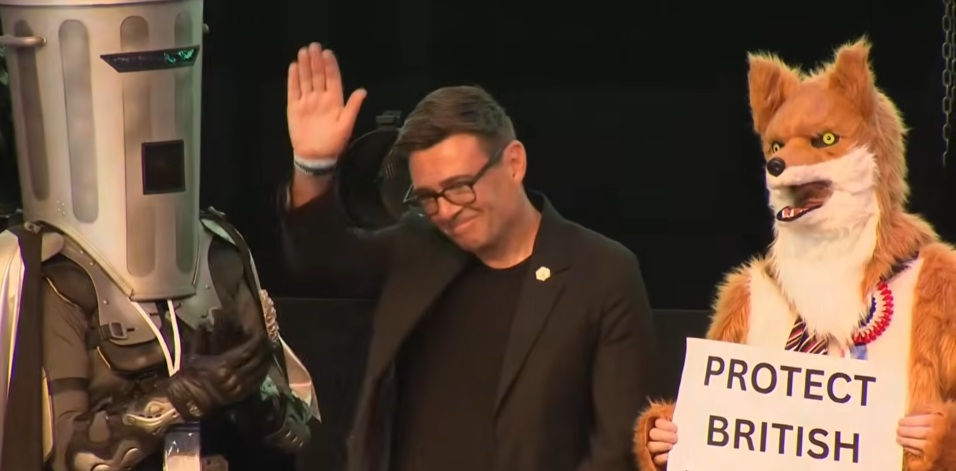
As of writing, Andy Burnham, the Mayor of Manchester, has returned to the House of Commons by winning a by-election — and everyone knows he’s planning to challenge Keir Starmer for leadership of Labour and thus the job of Prime Minister. By the time you’re reading this, the challenge has probably been made.
This is also the second attempt Burnham made this year.
In January, he attempted to run for a different Mancunian by-election, that of Gorton and Denton, but Labour’s National Executive Committee voted against it. This was clearly pressure from Starmer to keep out his challenger, a man he reportedly loathes and vice versa, but the justification was to “avoid an unnecessary mayoral election, which would use substantial amounts of taxpayers' money and resources”. They worried about this, that it risked losing Greater Manchester to an opponent like the Reform Party, and that it “would have a substantial and disproportionate impact on party campaign resources ahead of the local elections and elections to the Scottish Parliament and Welsh Senedd in May”.
Since then, the government failed quite badly in those very elections (losing control of Wales entirely), has been hit again by the scandals about ex-ambassador Peter Mandelson’s ties to the monstrous Jeffrey Epstein, had the Defence Secretary resign on grounds that defence funding was too meagre, and generally struggled with the cost of living, the US-Iran war, and outbreaks of race riots. Which raises the obvious question: what if Burnham had run earlier?
There were many Labour figures, including the Mayor of London and several Cabinet ministers, arguing he should be allowed to. The party's deputy leader, Lucy Powell, made the argument that their enemies might win if the wrong candidate was selected (and their candidate did come third), while Mayor Sadiq Khan said “I’m a firm believer in the best team having all the talent playing for them” and promised to find time “to knock on some doors for him” (he didn't do this in the end). What if that pressure is enough to weaken Starmer’s grip on the NEC just enough and allow for a very narrow NEC vote?
The most obvious result: Burnham is going to win the Gorton and Denton by-election just as he has the Makerfield one in our timeline. He’s a popular mayor and he’ll have ‘I will replace Starmer’ going for him with left-wing and liberal voters. While Labour came third in Gorton in our timeline, the combined Labour-Green vote was larger than the Reform candidate’s vote — a slight change would've seen Reform come third — and also bigger than Burnham’s victory in Makerfield, so it’s possible he has an even bigger share of the votes.
And this has the first butterfly effect: the Greens won that by-election, installing local plumber Hannah Spencer. At 40% of the vote to the Reform candidate’s 28.7%, it wasn’t close. Spencer hasn’t had time to do much yet, with the exception of upsetting a number of pundits by suggesting there may be a bit too much drinking in the afternoon at parliament (a bit of discourse that won’t happen in this timeline), but it was a sign that the Greens were competitive in Labour areas, it gave that party a boost at a time when a lot of left-wingers were looking towards it as a sign of hope. If Burnham beats Spencer, that boost is derailed.
It will, of course, depend on Burnham’s actions whether the Green threat is actually seen off or if socially liberal left-wingers will still look to Polanski's party. (As of writing he’s promising to keep the current draconian changes to immigration and changed from opposing banning trans people from gendered spaces to the standard Labour line of 'implement the ban but nicely') And it might benefit the Greens if there’s a temporary delay from Burnham taking over early. Polanski had a few public press stumbles, such as criticising the police for using too much force to detain a spree-stabber in Golders Green, and the Greens got caught having some appallingly nasty candidates slip under the radar (including their first for Makerfield), which will be less notable if the Greens weren’t on the up and aren’t seen as a legitimate threat to a governing party. Having time to tighten up could see the Greens in a better position later in this parliament.
A second butterfly is Reform will have lost to Burnham earlier. If their man Goodwin has the same bad loss, they can try the same line as they have in Makerfield OTL, that their voters tactically went to Burnham to get Starmer out. It’s a very silly line but they might be able to get away with it as it’ll be a single big defeat against a big beast. ‘We’ll win next time.’ Burnham, of course, will go into his leadership challenge saying he has shown he can beat Reform, as he will now.
However, Reform in February 2026 is a Reform that hasn’t yet had big successes in the May 2026 elections – multiple council victories, becoming the Welsh opposition – but also has not had its leader get caught out in a scandal about a massive cash gift, has not yet gained a new party to its right taking some of its vote and causing panic, has not had a poor campaign in Makerfield on top of a poor one in Gorton. A week is a long time in politics, a month can turn you from Obvious Colossus to Shaky.
The big question is the Manchester mayoral election to replace Burnham, where it’d be Continuity Burnham VS Reform in the eyes of the nation. Both parties will throw everything into it. Full disclosure, in January, I believed the threat of Reform taking Manchester in any such election meant Burnham was taking a stupid risk by trying to run as an MP. In January, the Makerfield election hadn’t happened. That election had a paper-strong locally known Reform candidate (who’d run as MP before and won a council vote!) turn out to have many skeletons in his closet that had been missed and women telling the press they didn’t want to vote for a candidate like that. This does not suggest they could have run a good mayoral campaign right after losing Gorton and would likely get stomped.
(Now they’ve had the successive losses in Gorton and Makerfield, they may put a stronger effort into the mayoral race. Will it be enough?)
The mayoral race will happen before May. It likely will be costly for Labour to run just before the nationwide races. It also means that Labour goes into May having fought Reform and won, then rematched and won again, and both times showing them to have embarrassing candidates. What does that mean for the council, Holyrood, and Senned elections if the party have this mark on them? This depends in large part if the Tories are able to take advantage in time, which they likely don’t, and if the Greens are still a threat and most crucially the state of Welsh Labour against Plaid Cymru. In our timeline, the Greens were able to challenge Labour in councils but not enough to win, just enough to help Labour lose, while Reform stepped all over the Tories. If Reform are shaky, the Greens reduced, and Labour having a ‘Burnham Bounce’, May could be a sign of Labour being back in England and likely Scotland too if they can retain seats/rise while the SNP still loses some.
(The size of their defeat in Wales means I don’t think they’re winning, and it’s more if they get completely smashed while Reform shoots up or just get a kicking into opposition by Plaid Cymru)
This does all depend on Labour having a ‘Burnham Bounce’ in May, which of course itself depends on Burnham winning the party election first. Can he?
Well, as I'm writing this, Starmer said for days after that he’ll fight on but then, after quiet words with ministers and his family, announced he'd resign instead. Former Health Secretary Wes Streeting, who had been talking for weeks about how there needed to be a contest and a discussion of ideas, received a quiet word from Burnham and decided actually it'd be fine for the Mancunian candidate to walk in. But will this be the case if this happens earlier?
The by-election and resulting leadership challenge will be taking place very soon after the Mandelson affair blew up again, leaving it a fresh wound bleeding all over the place. Starmer might then be expected to resign as he did in our timeline. I think this is unlikely because in our timeline, Scottish Labour leader Anas Sarwar had openly called for Starmer to stand down over this because of the threat to the May elections and Starmer said ‘no’ and got the Cabinet to back him. He’ll try it here too, and he won't have May's great defeat and the Defence Secretary's resignation leaving him with nobody willing to stand with him. As for Streeting, he was rumoured to want to run back in January but he didn’t challenge a weak Starmer, instead resigning his post and waiting for Burnham to kick it off. Nobody else is likely to run in any such contest as a third player because nobody else dared try it even after May's defeats, with backbencher Catherine West making a threat but then reigning it in as everyone waited for Burnham to make his move instead, and nobody is now. On the one hand, a Burnham VS Starmer contest gives Burnham a bigger mandate to change things because Burnhamism have beaten Starmerism in honourable combat. It would be harder for the usual lines of 'unelected Prime Minister' if the Labour Party had choice. (It also means Streeting is in the wings as the obvious challenger to Burnham, at least in the short term, if he's not brought inside the tent to piss out.)
However, the US-Iran War is going to break out two days after the Gorton by-election. As well as a problem for the world, it's going to be a problem for Burnham. What he'll want to talk about in his leadership challenge will be increasingly dominated with questions of “what will you do about the war”, “what will you do differently about the Special Relationship”, and of course “should you be challenging the PM when there's a war on?” Starmer's obvious move is to present Burnham as someone faffing around and distracting the country during a crisis while he's trying to keep us safe.
For this reason, I assume Burnham will hold off his challenge until sometime in March, once it’s clearer how the war is going. This means the Manchester mayoral election is likely happening during the leadership contest. It also means Burnham wins really close before May and so is going to struggle to properly turn things around, but it also means he’s going to have little time to do anything that makes voters go 'actually I hate him too'.
The May results could be seen as a sign that Burnham has turned things around and stopped a worse defeat, as he probably would have. It could also be seen as a sign that Burnham made the result worse! Depending on how well things go for Manchester, I think it’d be the former and that also, it’d be worse for Reform – they’d have a lot less chance to make any changes after a loss there, to convince voters to trust their candidates – and the Greens, who have less time to exploit any left-wing disgruntlement with Burnham’s reign.
So the result is probably Labour under Burnham is a stronger, more stable government.
In May.
Whether it can actually govern well for the next few years in the face of event after event – and Burnham would be the one inheriting economic shocks and riots that Starmer had in our timeline – we’ll be finding out in our own timeline very soon…
Charles EP Murphy is an author who, among other works, wrote the books Chamberlain Resigns, and other things that did not happen and Comics of Infinite Earths for Sea Lion.


Comments