
Dreams From The Dark Years: France Fights On
Updated: Jun 30
By Paul Hynes.
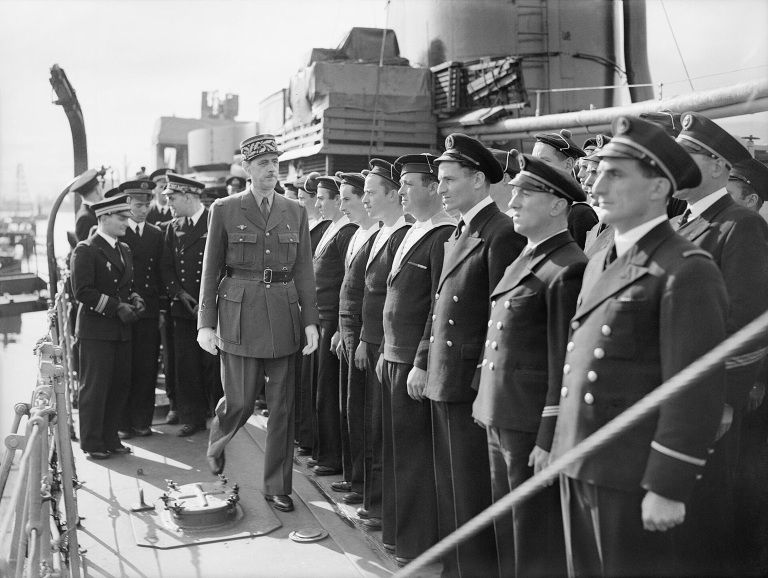
The flash of naval gunfire adds to the light of the early morning horizon. On this early day in June, it is the first greeting from the vast liberation armada swarming the Normandy coast. The defenders are both fascinated and horrified by the sight.
They respond with what little artillery they have. It is enough to make those in the landing craft clutch their Adrien helmets although many are more focused on keeping their stomachs as the crowd sends them up and down, up and down. Ahead lies their home, one many haven’t seen in years since the occupiers forced them to flee to the safety of the empire and the hospitality of their allies. For some landing it is the first time they have ever seen their spiritual fatherland, having spent most of their lives in Algeria, Senegal, Vietnam and numerous other places the French claimed patronage over. Now they were here to save her.
The landing craft hit the shore of Normandy and the first French forces hit the sands of what has been designated Omo’a Beach. It is the 6th of June, 1943 and the promised day of liberation is finally at hand.
Somewhere beyond the sea
The above is merely a depiction of a dream many French people had in the Summer of 1940. This included General Charles Noguès, the military commander of French North Africa, General Georges Catroux, the governor of French Indochina, Paul Reynaud the French Prime Minister until the 16th of June 1940, and most famously General Charles de Gaulle who attempted to carve it out of thin air. Parallels aside, it was one which could have been realised.
In reality, of course, the liberation of France would come a year later in the summer of 1944. The D-Day landings would be composed mostly of American, British and Canadian troops. Only one French unit was involved and that was under British command. The French resistance played a key role in passing intelligence to the Allies, harassing German troops and sabotaging infrastructure to delay their response; however, thousands of Frenchmen would also volunteer to put the resistance down. While the Allies and Germans engaged in bloody attritional warfare in the Normandy hedgerows a French civil war burned away in the south.
This state of affairs left the Allies wondering whether the French should be allowed to govern themselves. There was no clear legitimate French government like the one which had surrendered to the Germans in 1940 and subsequently collaborated with them. Instead, there was a pro-Allied French committee keen to present itself as the government in waiting but only recognised as such by London or Washington a few months beforehand in September 1943.
The fact France was liberated largely by foreign armies and self-rule was something which had to be granted has impacted the post-war French psyche in various ways. It led to bloody failed attempts to reassert itself as a colonial superpower and the more successful initiatives to create European institutions which would finally halt the generational cycle of continental slaughter. Three decades of post-war prosperity helped paper over these resentments but they lingered.
Processing the experience of wartime France has become the dominant feature of French historiography and it is no surprise that this is also the case with French alternate history or Uchronie, where stories of France fighting on feature prominently. Books, comics and entire online forums are dedicated to the idea. Perhaps the most ambitious is the Fantasque timeline originally by Jacques Sapir amongst others which has a fanbase so dedicated and diverse it can be hard to follow.
In the Anglosphere alternate history is also dominated by works around the Second World War but mainly deal with Axis victories. Characters pine for things going back to what we could consider normal. This is perhaps most egregious in the televised adaptation of Philip K Dick’s The Man in the High Castle where people literally have a portal to our world to escape to.
Themes around the fragility of national identity aren’t unique to French alternate history but they are perhaps more self-aware. France accepting defeat was a choice. Decisions going differently fuel escapism for a better world one which would have to start, appropriately enough, with an escape.
La Méditerranée Traverse la France
There is no denying the military situation by mid-June 1940 was shockingly grim. Only a few weeks after the German invasion, much of Northern France, including Paris, was under Nazi occupation. There had been hundreds of thousands of casualties, millions were displaced, most of the French army was knocked out, the Luftwaffe had complete air supremacy. Paul Reynaud’s government had abandoned Paris and established itself in Bordeaux by the 14th, but if the decision had been made to fight on it would have had to move somewhere overseas and quickly. Metropolitan France would have been overrun within a few more weeks regardless of the armistice.
Nonetheless France still had vast reserves it could draw upon. The French Empire was the second largest in the world and remained intact. So too was the modern French fleet which was the world’s fourth largest. These were what gave Hitler pause when it came to his decision to offer the French ‘lenient’ terms.
The Polish government had no colonies and only a handful of ships but continued to fight on after their country was overrun in 1939. Compared to them the French had an embarrassment of riches.
Perhaps this is an overly rosy view of things? It is easy for me to say that the French government should have stayed on the winning side, knowing as I do that the Allies were going to win the war anyway. This certainly did not seem inevitable in June 1940. Admiral Darlan, the head of the French navy, dismissed the practicalities of fighting on from North Africa. Some of his criticisms seem valid, such as how many troops could be successfully evacuated from metropolitan France. Others, such as the safety of North Africa, seem to be based on the inevitability of Spain joining the Axis and on the imminent defeat of the UK, neither of which happened.
There were plenty of figures within the French leadership who were confident the UK could fight on. After all Napoleon had tried and failed to maintain a continental system against the British, why should Hitler succeed in doing so? The decision to surrender was fundamentally a political one.
The two senior military men within the French leadership alongside Darlan were Marechal Philippe Pétain and General Maxime Weygand. Both had been brought into leadership positions after the crisis had already begun in the hope they could turn things around, but both would instead lead France to surrender. It was a decision based on their own worldviews as much as any strategic considerations. These beliefs included mistrust of the British or doubt about their ability to fight on; fear of chaos or Communist revolution if the government left France; fear for the fate of the French populace left behind; and belief that national revival could only take place on French soil. These were deeply ingrained but ultimately immaterial to France being able to fight on. Alexander Werth notes that there was a genuine fear of a mass slaughter of the French people but Pétain and Weygand found continuing the war for democracy alongside the UK equally distasteful.
The political prestige both men could bring to the table was more important than the substance of their arguments. Had both argued fervently for continuing on to the bitter end, the pro-surrender faction would be silenced. Instead Pétain had made it clear he would stay in France regardless of whether Reynaud’s government fled, threatening to tear the government apart. Professor Julian Jackson notes Pétain in France would likely have had more legitimacy than Reynaud in Algiers or London, at least initially. There was also the threat, sources vary of how explicit it was, of Weygand launching a military coup if he didn’t get his way.
However there was no guarantee they had to be there. Pétain could have remained in Spain and Weygand in Syria far from where the decisions were being made. These were both appointments Reynaud simply didn’t have to make. A firm decision was required and Reynaud was exhausted by the divisions in his cabinet. A more determined Reynaud is thus often the point of divergence in scenarios where France fights on. As Prime Minister he could have simply informed his government they were moving across the sea to Algiers rather than Bordeaux during the long retreat from Paris.
Algiers was after all considered an integral part of France by many French in 1940, much to the chagrin of most Algerians. The Mediterranean was portrayed as nothing more than a large river dividing France in colonial propaganda. Some who had always opposed the war such as Paul Baudoin may have complained or even resigned but without Pétain or Weygand, such figures would have lacked centres of gravity to organise around. Historically the colonial regimes in Indochina, North and West Africa and Syria all implored the government to fight on. Any of these places would have provided a welcome base for doing so.

The practicalities of leaving would nonetheless be a monumental task. Exhaustion and defeatism were not unique to Pétain and his allies; it was simply reality to millions of French people by June 1940. The French government leaving for Algiers would go down poorly with many; a historical attempt to relocate part of it there later in June had been delayed by the crew of the ship going on strike. The image of a cowardly government fleeing a sinking ship rather than remaining to endure the hardship they had caused could easily have been spun by whoever did remain behind.
Pétain’s misinterpreted speech about the need to stop fighting had caused chaos amongst the remaining French defenders but the news the French government had left might well have had the same effect.
Dunkirk on the Med
Even if there was no collapse in mid-June, French resistance and perhaps more importantly German overextension could only delay the inevitable. In his war diary, the German army's Chief of Staff Franz Halder noted some Panzer divisions were down to a third of their strength yet there was no sign of exhaustion. Halder estimated they would reach Bordeaux by the 25th of June but seizing the Atlantic coast and advancing down towards the Alps appeared to be the immediate German priorities.
The question would be how much longer France could hold out and what could be evacuated in the meantime to continue the fight from overseas. Hundreds of aircraft of all types had already been evacuated to North Africa, as had most of the French fleet. Even more pilots and planes could be brought over, possibly over a thousand in total although the Armee de l’Air would not be immediately operational until sufficient facilities could be made available in North Africa or elsewhere.
How many French troops could be saved? Almost a million were still fighting after the fall of Paris, although about half of these would be cut off when the Germans surrounded the Maginot Line on the 15th of June. Admiral Darlan had estimated that there would only be shipping available to evacuate 30,000 troops and there was no indication of who would be selected. However, it is hard not to find this a rather pessimistic figure from Darlan, who had by this time privately concluded France needed to make peace. Similar estimates had been made about the number of troops who could be evacuated from Dunkirk a few weeks beforehand but ten times that number managed to escape across the English Channel.
Could British and French sailors achieve the same feat in the Atlantic and Mediterranean with ports still in French hands? A lot would depend on quickly chartering every available boat in ports such as Bordeaux, Marseilles and Toulon and getting every available unit aboard. Unlike Dunkirk the forces being evacuated wouldn’t be concentrated in a small stretch of coast. Some would need to make a journey of hundreds of miles with inadequate transport, dodging German tanks and the temptation to simply go home rather than flee abroad and leave their families to an uncertain fate. It would be very simple to blend into the millions of civilian refugees on the roads as many French soldiers did historically to escape German captivity.
Going by Darlan’s estimate the 30,000 French troops evacuated would join the 120,000 already within North Africa. The 200,000 or so French troops who had escaped from Dunkirk and elsewhere might also travel there although it might be easier to keep them in the UK for the meantime. Like most European empires, French colonies had economies designed primarily for extraction of their natural resources. There would be little heavy industry to rebuild the French army with. Rearming would initially be dependent on what could be gained from the UK and US. More than 200 modern fighter aircraft had already been ordered from the United States with only French surrender preventing the delivery. The abundant French gold reserves, already evacuated to Africa, could buy many more.
A Franco-British Union?
There was of course the idea proposed by Churchill and backed by Reynaud that France and the UK should unite into a single state. It is an entertaining scenario to envisage, the Channel becoming a river between a united state much like the French envisaged with Algeria and the Mediterranean.
The practicalities of it were never worked out however. It is hard to avoid the fact it was a desperate proposal made between two men who had closer personal goals than the institutions they would have to merge. As seen in the last article the offer had the opposite effect on the French leadership, making them more suspicious of British intentions. Leading members of the British state weren’t even aware Churchill had made such an offer until it was rejected. This included the King who had no idea he was being prepared to share the role of Head of State.
An independent French regime in Algiers determined to fight on would likely be more welcome to Churchill and Reynaud than a joint cabinet hopping between Algiers and London. Nonetheless economic and strategic integration had been underway since the outbreak of war and would likely continue. This was where Jean Monnet, the future father of the European Union, first gained experience in merging national economies.
Strengthening the French Empire for war had been something which had helped Reynaud become Premier and he would be well placed to continue his work here. He would be assisted by others such as Georges Mandel who had worked on developing colonial industry during his time as Minister for the Colonies.
La Releve
How would the war have panned out had France fought on from its empire?
Essentially it means a superpower remaining on the Allied side. The French Empire would be diminished but it would be able to bring powerful forces to bear against the Axis almost immediately. The earliest effects would likely be felt in the Mediterranean where the butterfly effect caused by this different decision would very quickly become a typhoon for Mussolini. The addition of the French fleet would leave the Regia Marina even more limited in its ability to control the sea which Mussolini had declared to be rightfully Italian. Italian Libya being surrounded on all sides by British and French colonies means the war in North Africa likely ends before Rommel’s panzers can run amok.
With North Africa secure and the Med under Allied control, the British and French could launch operations against Southern Europe. Historically the British strategy had been to look for opportunities where they could draw the Germans into areas where the Royal Navy could be most effective, such as in Greece, Italy or Yugoslavia. French assistance could make these plans more realistic, however from Algiers the priority would be for a return to Metropolitan France as quickly as possible.
The entry of the Soviet Union and the United States into the war in 1941 would transform the Allied powers into an unstoppable economic and military alliance, and it would bring two more voices of support for urgently landing in France. Historically, with the Vichy regime and the war in North Africa dragging on until the spring of 1943, the British were able to draw out American designs and Soviet requests for a cross-channel invasion into 1944. An Allied France likely moves that forward, perhaps as early as 1942 although 1943 would be more realistic if the operation was to succeed.
French forces would likely join in storming the beaches. Having been in the war from 1939 it is unthinkable they wouldn’t be in the first waves returning to their homeland.
Naturally this is just one scenario. Such a major historical divergence could cause untold complications. Perhaps Spain does join the Axis with the added pressure of Germans across their border in 1940. Perhaps the French Empire and its fleet remaining in the war makes the United States more confident of maintaining neutrality. Perhaps Anglo-French victories in the Mediterranean force the Germans to delay or even abandon plans for the invasion of the Soviet Union. Perhaps an Allied France is able to prevent the Japanese occupation of Indochina and the Japanese keep their war confined to China.
Any of these factors could significantly alter the course of the war but with France remaining on the Allied side, the ultimate outcome is still likely to be a war which ends earlier and with French troops taking the lead in liberating France.
France Fights Forever?
The media around France fighting on usually casts it as a form of national redemption if not also a potential triumph for French republican ideals. But would the Third Republic emerge from this test with its ideals of liberty, equality and brotherhood stronger? It is easy to imagine French troops marching through the streets of liberated towns and cities to the cheers and relief of those who had spent years under German occupation. What the post-mortem would look like is murkier. There is no doubt those who had fled in 1940 would attempt to return in victorious triumph but would the French populace who had endured years of German occupation be happy to see them?
A historical and political debate has raged ever since the post-war trials of Pétain’s regime as to whether collaborating with the Germans spared France any suffering. This will be examined in later articles but the short answer is it likely didn’t make much difference in comparison to other Western European countries occupied by the Nazis and may have even made things worse. The French exiles would likely not return to ruins in the same way the Poles did. If anything they would likely return to France more quickly than in our time.
The French people in this scenario wouldn’t know that however. There might well have been some resentment of those who had fled France compared to those who had stayed behind to resist. The most prominent groups in this resistance would likely be the Communists as in our time, however the underground networks established by reactionary groups such as La Cagoule might also make them prominent resisters. The Third Republic would have survived the war intact but it might not survive the peace if it was still blamed for causing such a desperate situation in the first place.
One certainty would be how important the colonies had been for France’s strategic position. Would French colonial subjects be rewarded for their contributions to saving France or would they be cast aside? Holding on to the empire might become even more important to whoever formed the post-war French government, particularly if large investments had been made into building up industry in the colonies. Many French who had evacuated across the empire in 1940 might choose to stay.

For the defeated Germans there might be greater enmity, particularly if the occupation could only be laid at their door. Integrating Germany into new European institutions might still be seen as the best way of ensuring a lasting peace. However, architects of the European Union, such as Jean Monnet largely rose to prominence due to being some of the few people to stay in London with de Gaulle. Creating more elaborate systems for containing Germany might become the agreed strategy instead, the French might push for annexing areas such as the Saarland into France and/or breaking Germany up into smaller states.
De Gaulle had won his legitimacy based on seizing French colonies away from Pétain and by the late fifties he was perhaps the only figure on the French right who could lead France away from costly colonial adventures. If France had saved itself entirely through its empire this might become difficult. A right-wing France could emerge similar to the Estado Novo regime in Portugal and end up fighting colonial wars into the seventies.
A mirage?
This article has attempted to cover two major areas of France fighting on. The first is the practicalities for which everything was doable. There was a political and strategic impetus for France to fight on to victory even if some determinism might be at play in how the war would unfold. The larger point of national redemption portrayed in these scenarios feels weaker. France could only have restored her liberty on the basis of having made sure it remained taken from tens of millions across the globe. Would that security have stretched out into the world or would it also ultimately have killed liberty within France as well?
Nonetheless I can see why it is an attractive prospect. A defeated underdog regrouping and coming back to fight anew. Two allies, former enemies, fighting on with their backs to the wall to ultimate victory. It is understandable why such a romantic notion is popular, particularly given what happened when France did not fight on.
In the next article we will examine what happened following the French attempt to exit the war and the dreadful decisions former allies resorted to in the hopes of avoiding France’s fate.
Paul Hynes is the author of the Decisive Darkness series and the Red Fuhrer series.


Comments