
Review: The Vanishing Kind
By Charles E.P. Murphy
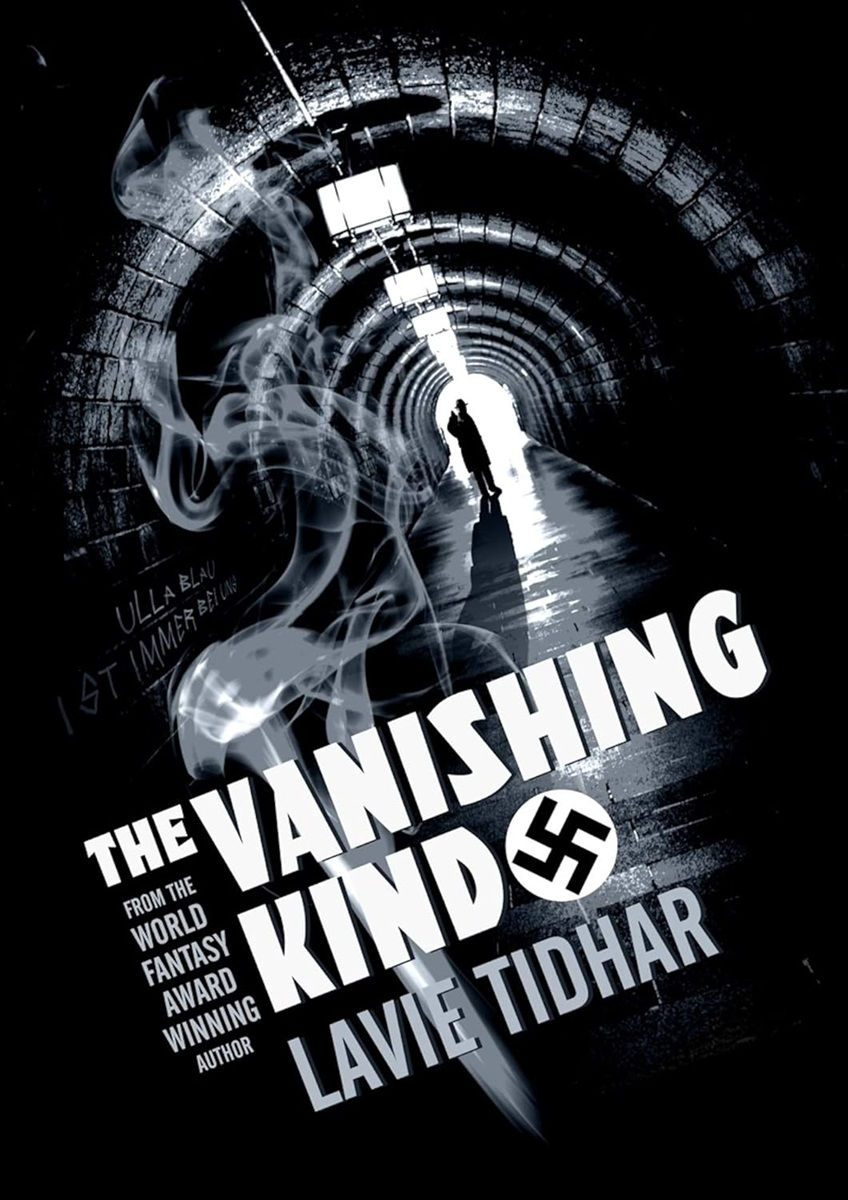
An everyman who can handle himself but has naive romantic ideals goes looking for a missing love on the mean streets, in a dark and dangerous world he's not ready for, and learns the damsel he's looking for ain't much of a damsel. Among the sinister figures circling him, there's a man who seems to know too much and he's not telling us what.
A standard noir, except the everyman is a Wehrmacht veteran of the Eastern Front, the mean streets are a pacified London years after its conquest, and the man who knows too much is an inspector in the British Gestapo.
Tidhar's novella blends together grubby pulp crime, alternate history, and a sardonically winking bit of metafictional gameplay by making it an Axis Victory version of The Third Man, right down to the hapless Gunther Sloam working on a Western film just as Third Man's Holly Martins wrote cowboy pulps. When he goes looking for his long-lost love Ulla Blau and of course finds she's not the victim he thought, he finds out one of the crimes she may have been involved in was dealing in diluted medicine for children's wards, just as the sinister Harry Lime was. But this reveal of Blau come early in the story, so a canny reader will be asking: what worse stuff is coming? For the most part, The Vanishing Kind plays out just as it could have if this wasn't alternate history and it was a Gary Sloane in post-war Vienna (or Berlin to be less on the nose). It could even be a German veteran visiting the real post-war London after an old girlfriend goes missing, for the bombsites and the dirty streets of Soho aren't far off the real Fifties; a throwaway mention of kids playing in the craters and sometimes finding an old bomb isn't an AH mention. Kriminalinspektor Everly casually mentions the torture and executions of the Gestapo, but it's mostly not on the page.
And then you get things like a woman laughing about the "fire sale" she got fancy loot from when the Jews were removed from society. Or the mention of a photo of Leni Riefenstahl in a conquered Africa, the landscape pointedly called "empty". Or Gunther Sloam gushing early on to Everly about Alfred Hitchcock, only for us to learn the man died in the invasion and for the conversation to go on to something else. Or how even when the Gestapo are playing the role of dirty cops and spooks up to something, Sloam, a good German, immediately defends them as necessary to a foreigner.
Or when Gunther Sloam has to play the heavy and it comes easy, able to slip back on the man who did things in the march on Moscow he doesn't like to talk about... and later, despite his heavy memories, doesn't believe anything bad about the extermination of the Jews. It's not constant with him, he's not heiling all over the place and remembering war stories with gritted teeth around a cigarette, he's very much still the normal everyman, a 'good' man as Everly sometimes think. It's just this is what an everyman is in a world where the Third Reich won.
This is the power of the novella, the thousand nasty little bits of darkness that slips out when you've let the plot lull you into thinking it's a 'normal' noir. Everything you expect is knocked a little bit off kilter. You feel grubbier as you read it and think about all the things you're not getting to see.
Discuss this Article
Charles EP Murphy is an author who, among other works, wrote the books Chamberlain Resigns, and other things that did not happen and Comics of Infinite Earths for Sea Lion.


Comments